

AI Powered Course Creation From Your Existing Workflows
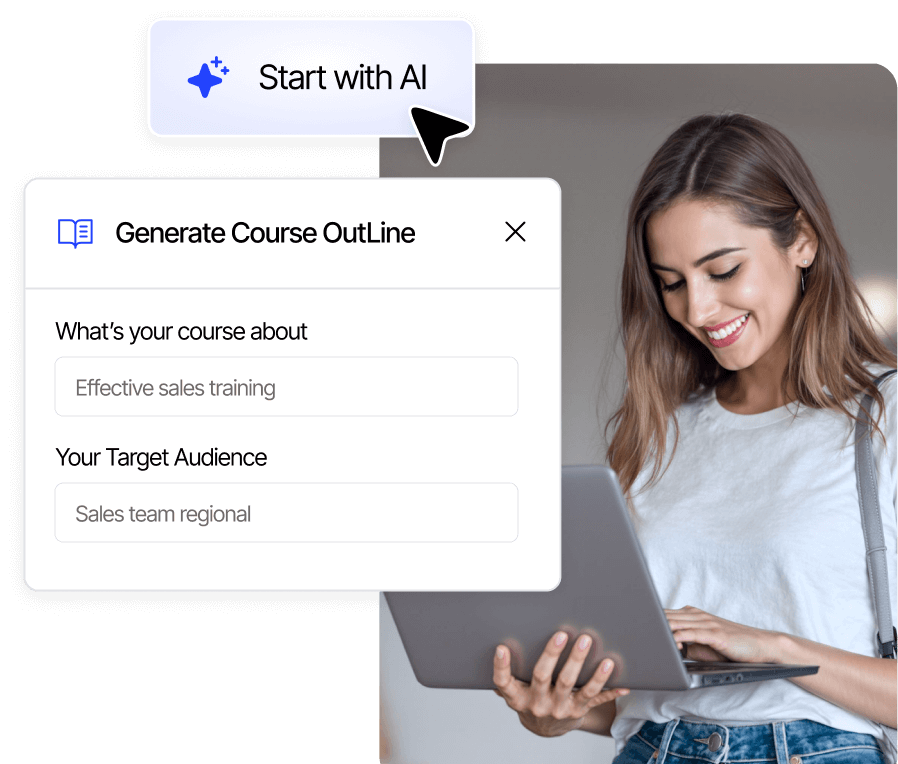
LearnUp turns your workflows, processes, and institutional knowledge into structured role specific courses starting from your existing materials or created from scratch using AI agents
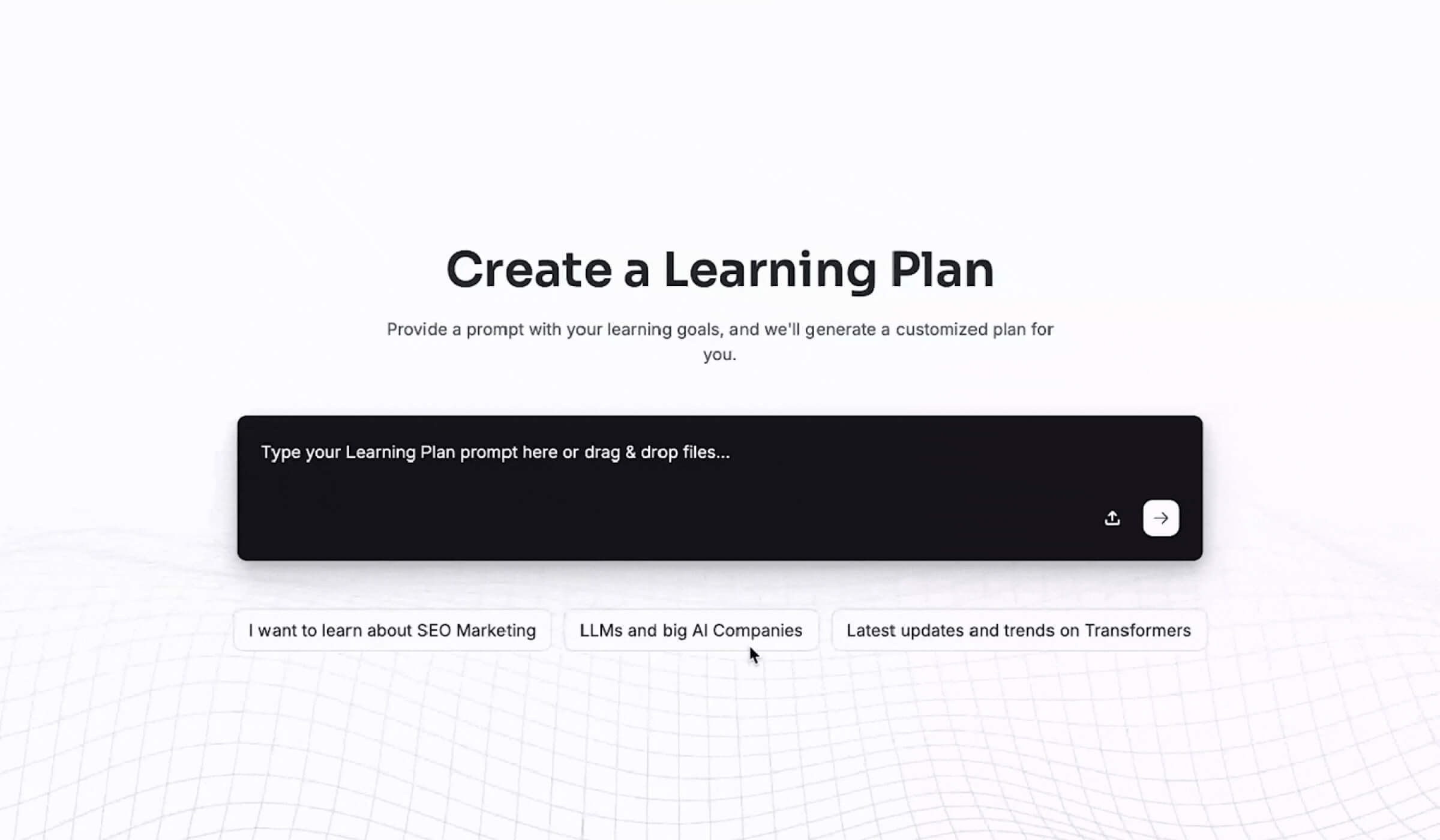

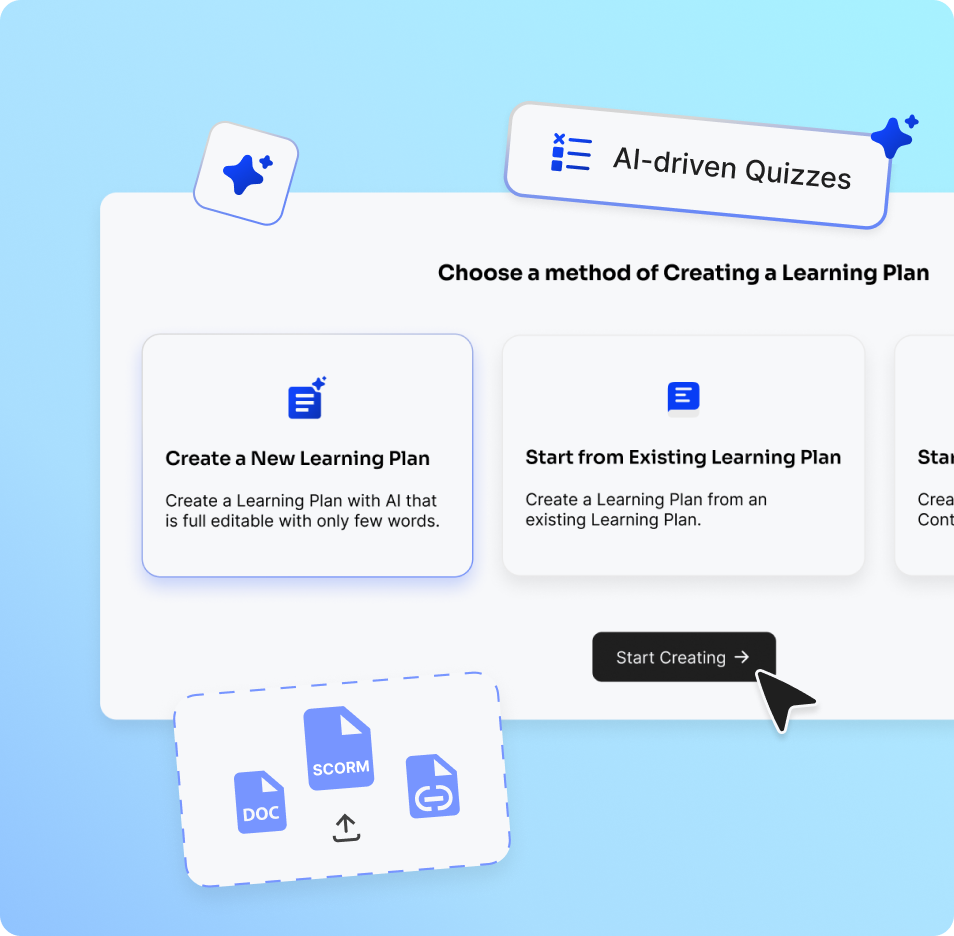
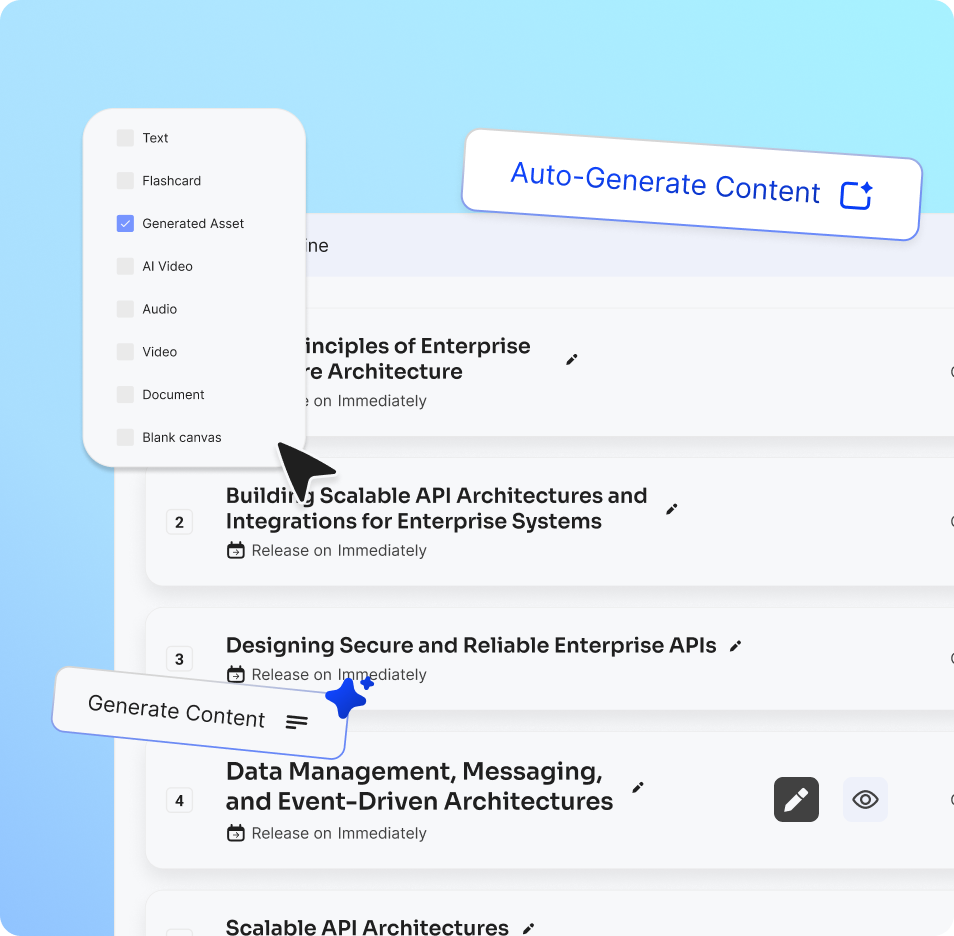
Training should mirror your workflows. LearnUp helps you understand, engage, and inform learners without changing your process or adding complexity.
.png)
Build learning that speaks to your teams. LearnUp uses your documents, tools, and steps to create training that feels familiar and useful. Assign content by role, region, or task so each person gets what they need, when they need it.
.png)
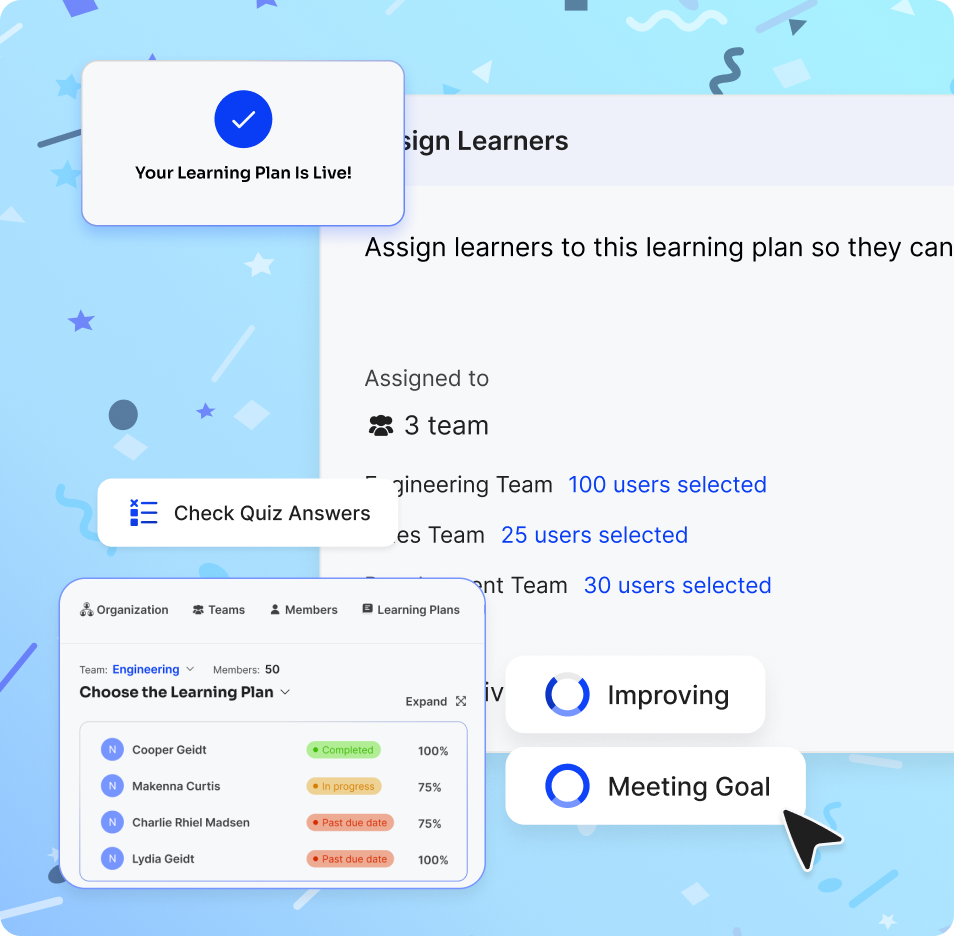
Create guided courses and track how training is being used. See where people are progressing, where they need support, and where content needs refinement. Assign courses and control deadlines with a clear view of engagement.

Assign training by role team or location so learners see only what is relevant.

Automatically translate training into 70+ languages while preserving structure, assessments, and role-specific context.

Deliver training in LearnUp or export it to your LMS HR system or internal tools.

Track changes over time see who edited what and maintain audit-ready records.

Design assessments that reflect real decisions and workflows.

See engagement patterns and performance gaps across teams.
Everything in LearnUp starts with your workflows, your processes, and your teams. You can begin with existing documents or let AI agents create training from scratch based on how your organization actually works. We help you structure knowledge for learning and stay out of the way. No generic templates. No forced formats. Just tools that help you teach the way work gets done.

Cut onboarding time in half for vendors and new hires
Enable faster role readiness with training mapped to real workflows
Save hours each week by converting existing internal docs into training
Support team growth without needing instructional design resources
Mid market teams use LearnUp to onboard faster and scale training without adding headcount
Build learning paths across support, QA, implementation, and operations
Repurpose SOPs, scripts, and walkthroughs into structured courses
Deliver in-platform or export to your LMS with analytics included
Equip HR, CX, and partner teams with tools to track progress and completion
Used by training leads and BPO operations teams supporting multiple client accounts
Onboard global teams, BPO vendors, and contractors quickly and consistently
Streamline client onboarding and implementation without live walkthroughs
Keep frontline teams aligned as products and processes evolve
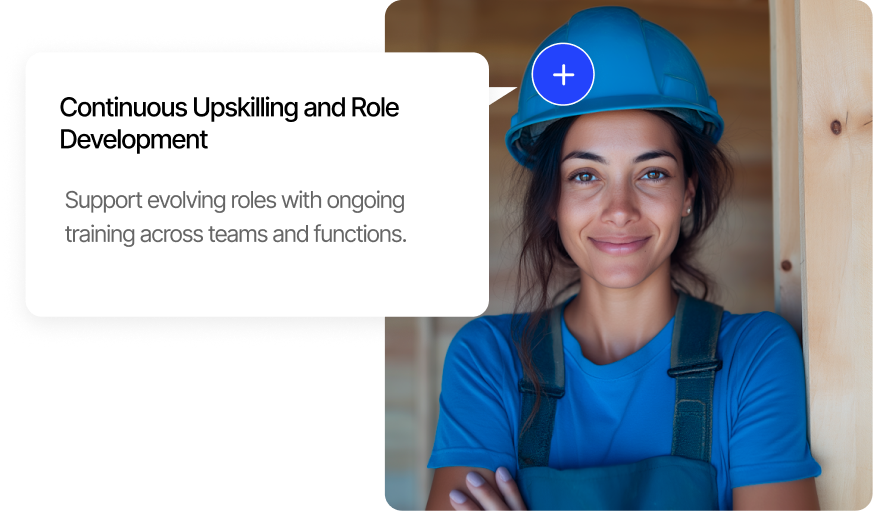
Upskill support and technical roles with structured, easy to maintain training
Used across SaaS, healthcare, and outsourced service teams






LearnUp helps you create structured, high-quality training from the knowledge and processes you already trust so enablement never slows down growth.

Turn SOPs, scripts, and walkthroughs into structured learning

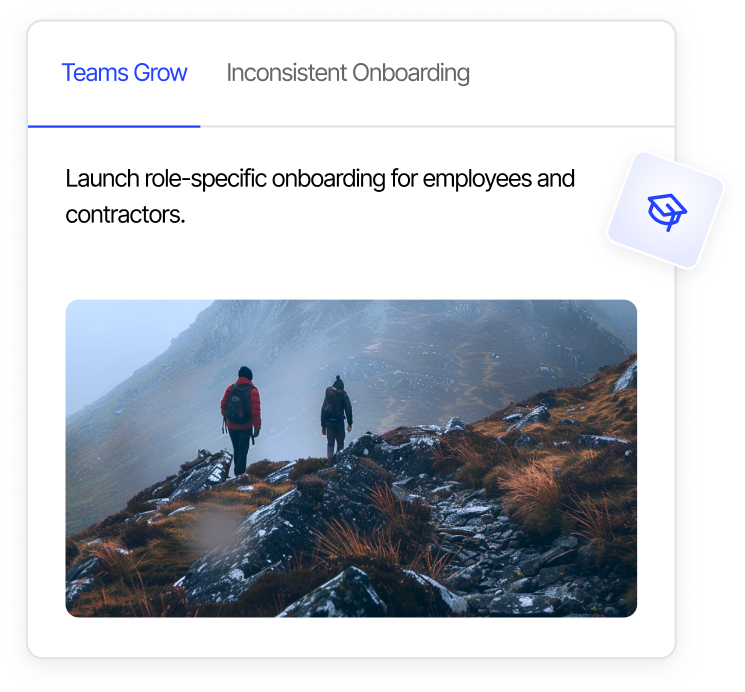
Launch role-specific content to meet organizational objectives

Edit, version, and evolve training as your workflows grow

Track readiness across teams, partners, and vendors
Spot drop-offs and learning gaps with simple dashboards
Prove enablement impact without chasing completion metrics
When teams need better product training, they choose LearnUp AI to accelerate skills and scale success.
LearnUp supports fast-paced teams across onboarding, support, ops, and delivery without changing your tools or your process.
Read More
Read More
Read More
When teams need better product training, they choose LearnUp AI to accelerate skills and scale success.
Standardize knowledge, reduce ramp time, and keep teams aligned as work evolves.

